

It's 7:40pm. You're closing out, or eating dinner, or finally sitting down.
Someone finds your business, likes what they see, and sends a message asking if you're taking new customers.
You'll see it tomorrow morning. You'll reply within the hour, politely, professionally.
They booked someone else at 7:43pm.
Not because that business is better than yours. Because they answered while the person was still holding the phone.
That's it. That's the whole thing. And it's happening to you weekly.
Being Available Isn't the Same as Being Fast
You take pride in doing this yourself. Answering your own phone. Knowing your customers by name. That's real, and it's worth something.
But there's a gap between how you think you're being judged and how you're actually being judged.
You think the comparison is: are you good?
The comparison is: did you answer?
Someone with a broken water heater has four tabs open. They're not evaluating craftsmanship. They're waiting to see who gets back to them, and the moment one business does, the other three stop existing.
Old-school service isn't dying. But "I'll call you back" stopped counting as service somewhere around 2020, and most local businesses haven't adjusted.
The fix isn't working longer hours. You're already past capacity. It's making sure the first response happens without you.
Bad Chatbots Poisoned the Well
Everyone's had this conversation:
You: Do you take walk-ins? Bot: For more information, please visit our contact page.
That thing deserved to die. And because those bots were everywhere for a decade, a lot of owners assume that's still what "chatbot" means.
It isn't. But the bar being that low is actually your opportunity — because your competitors are avoiding this for the same outdated reason.
A good one doesn't try to be clever. It does the boring 80% flawlessly:
- Answers the same ten questions you answer every single day
- Takes a name, a number, and what they need
- Books the appointment while the person is still interested
- Says "let me get someone on this" when it hits its limit, instead of looping
That's not a robot pretending to be human. That's a receptionist who happens to never sleep.
The difference between a bot people tolerate and one people like is almost entirely training. Feed it your actual pricing, your actual services, your actual way of talking. Then test it with the weird questions your customers really ask, not the ones you wish they'd ask.
Skip that step and you get the water-heater bot. Do it properly and people finish the conversation without ever realizing they'd have waited until morning otherwise.
Voice AI Is the New Front Desk
Chat gets the attention, but most local business still starts with a phone call. And the call is where you're bleeding worst, because a missed call doesn't leave a trace. There's no unread badge reminding you it happened.
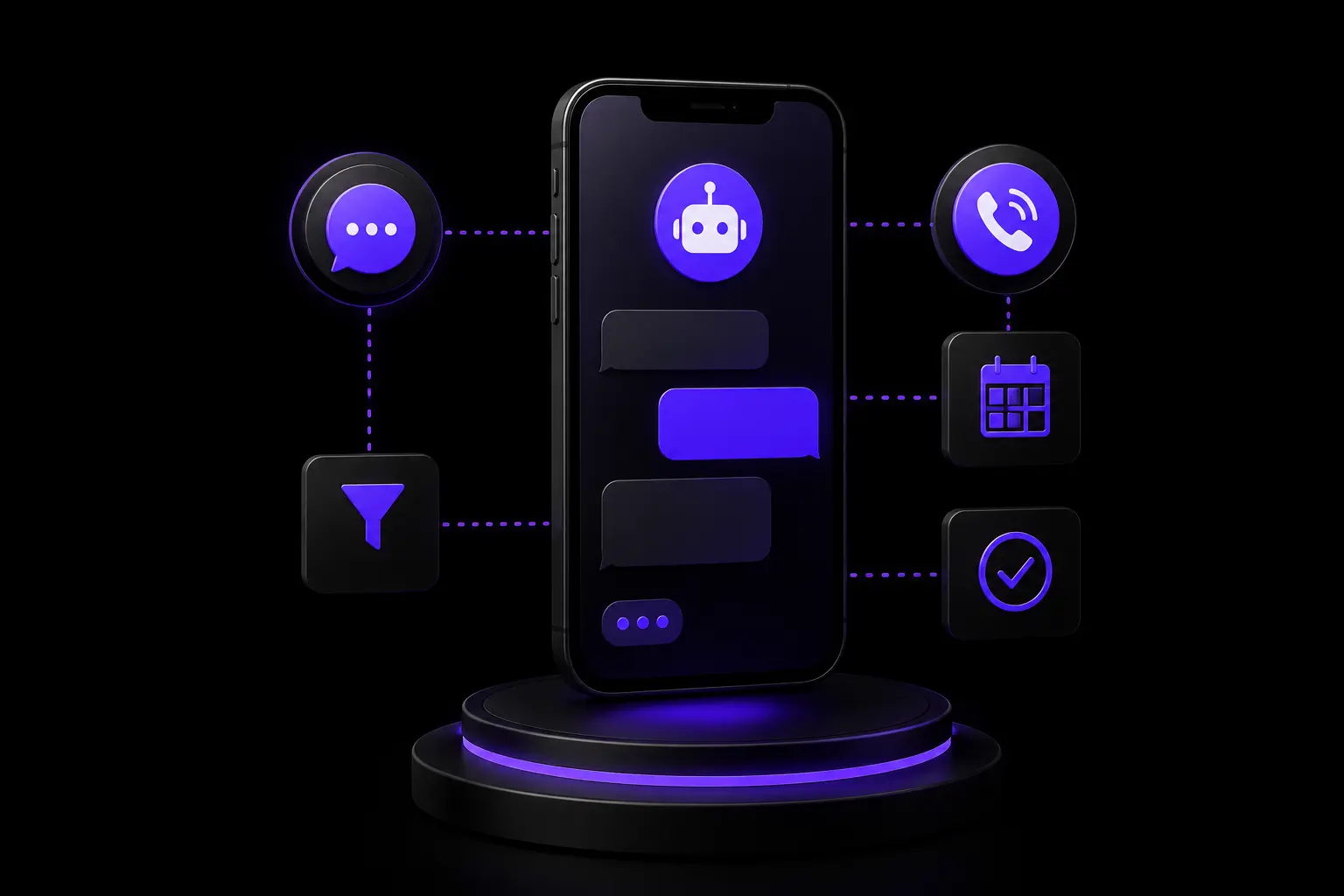
Voice AI in 2026 isn't the "press 9 for directory" nightmare. It's brand-trained, sounds natural, and handles the calls you were never going to catch anyway:
- Picks up after hours and on weekends
- Answers the questions you get twenty times a week — hours, location, whether you service their area
- Books straight onto your real calendar
- Texts you immediately when someone needs an actual human
The best framing I've heard from a client: it's not replacing the front desk, it's covering the hours the front desk was never there.
And the handoff matters more than the automation. A caller who gets told "I'll have someone call you in the morning, what's the best number?" leaves satisfied. A caller stuck in a loop leaves angry and reviews you for it.
The handoff doesn't have to wait for morning either. During business hours it can transfer live — if someone's upset, asks for a person, or brings up something outside what it should answer, it puts them on hold, dials your front desk, and merges the two calls so the customer is actually connected instead of being told to try again later.
That's the part most people don't realize is possible. It means you can let it take the overflow at 11am on your busiest day, not just the calls at midnight, because anything it can't finish gets walked to a human while the person is still on the line.
Why the First Reply Wins
This isn't a vibe. It's the most consistently replicated finding in lead research.
The Harvard Business Review study everyone cites found that companies contacting a lead within the first hour were roughly seven times more likely to have a meaningful conversation than those waiting even one hour longer. Response time beat almost every other variable they measured.
That research is over a decade old — and customer patience has only gotten shorter since.
You don't have to be the cheapest. You don't need the best website in town. You need to be the one who replied while they still cared.
Here's the uncomfortable part: speed reads as competence. A fast answer signals that you're organized, that you want the work, that you'll probably show up on time too. A slow one signals the opposite, fairly or not.
Customers don't remember the business that might get back to them. They remember the one that already did.
What to Automate — and What to Never Automate
AI is a tool, not a strategy. Point it at the wrong things and it'll do damage faster than a human could.
Hand it these:
- The repeat questions. Hours, location, parking, service area, "do you work on X." You've answered these ten thousand times.
- Lead capture. Name, number, what they need, when they need it — logged before anyone picks up.
- Scheduling. Real availability, real calendar, 24/7.
- First contact. A warm greeting and enough triage to route it properly.
- Intake. Collect the details so your team starts the conversation already informed.
Keep these human:
- Anyone who's upset. An automated reply to a frustrated customer turns a complaint into a review. Route it to a person immediately.
- Anything requiring judgment. Custom quotes, unusual jobs, edge cases. If it needs someone who knows the trade, it needs someone who knows the trade.
- Sensitive information. Medical details, financials, anything private stays off the bot.
- Promises. A bot should never commit to work, a timeline, or a price you haven't confirmed you can deliver.
The rule that keeps this simple: let AI filter, let your team finish. It buys back the hours you were spending on repetition and spends them on the conversations that actually close.
"But I'm Just a Local Shop"
This is the objection I hear most, and it's backwards.
Automation is most valuable when you're small. A twelve-person company has someone whose job is answering the phone. You don't. You're the owner, the scheduler, the technician, and the front desk — which means every missed call has a real dollar value and no backup.
Big companies use this to save on headcount. You'd use it to stop losing jobs you already earned.
The tooling isn't the barrier it was either. GoHighLevel, Zapier, and Make handle most of this without a developer. What actually takes effort is the unglamorous part: deciding what your bot should say, what it should never say, and where it hands off.
You don't need a rollout plan. One chatbot answering FAQs and capturing leads is a real improvement over a contact form nobody checks on Sundays.
The Objections You're Already Thinking
"I don't have time to set it up." Neither does anyone. But this is one of the few things in your business where a few hours of setup permanently removes hours of recurring work.
"What if it sounds fake?" It will, if you deploy it untrained on generic defaults. It won't if you feed it your real language and test it before it goes live. The tell isn't that a bot answered — it's that the answer was useless.
"What if people hate talking to bots?" People hate being stuck with bots. Nobody minds getting a straight answer at 9pm. The complaints come from systems with no exit — which is why the handoff to a human is the part worth building carefully.
Where to Start
Don't automate everything. Automate the leak.
Look at last week: how many calls went unanswered, how many messages sat overnight, how many people asked the same question. That's your list, and it's usually shorter than you'd expect.
Start with whichever one is costing you the most, get it working properly, and leave the rest alone until that one is boring.
Meanwhile, the business across town is answering at 7:43pm. Not because they're smarter than you. Because they set it up once and stopped thinking about it.
Common Questions
Will this make my business feel less personal?
Only if you let it answer things it shouldn't. Used properly it does the opposite — it handles the repetitive stuff so you have time for the conversations where being personal actually matters. The businesses that feel impersonal are usually the ones where the owner is too buried to call anyone back.
Do I need to be technical?
No. The platforms are built for non-technical owners. The part that needs real thought isn't the software, it's deciding what your business should and shouldn't say automatically.
I already have someone answering calls. Does this replace them?
No, it covers what they can't — after hours, weekends, and the overflow when three calls come in at once. Most businesses find it makes their existing person more effective, not redundant, because the easy questions stop interrupting the real work.
Is it expensive?
Cheaper than a part-time hire, and it works every hour of every day. The more useful comparison isn't the monthly cost — it's what one missed job per week costs you over a year.
Where do I start?
One thing. Usually an FAQ-and-booking bot on your website, or voice coverage for after hours if most of your leads call. Get one working, then expand.